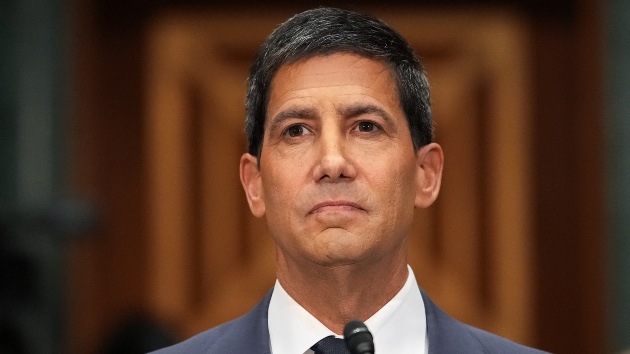
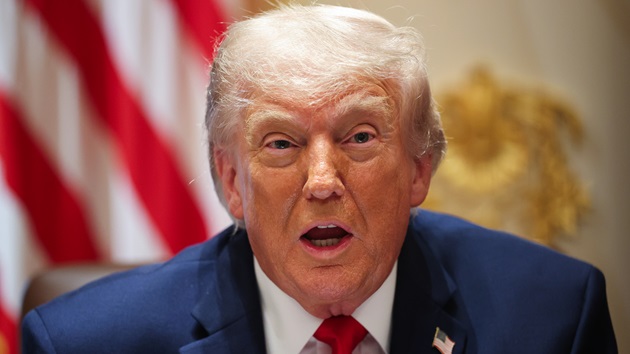
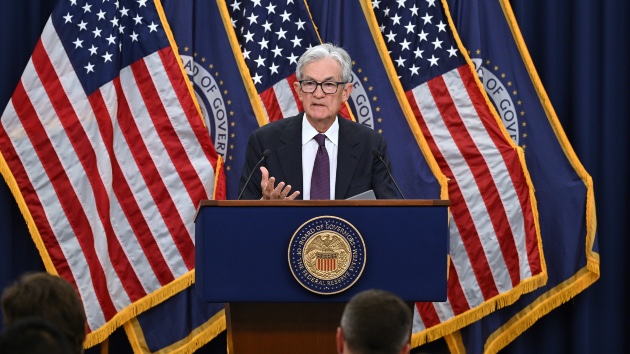
Kevin Warsh, Chair of the Federal Reserve, on April 21, 2026 in Washington, DC. (Photo by Andrew Harnik/Getty Images)v
(WASHINGTON) -- The Federal Reserve is set to announce its latest decision on interest rates on Wednesday as the central bank weathers the highest inflation in three years.
The announcement will mark the first possible adjustment of the benchmark interest rate since Trump nominee Kevin Warsh began his four-year term as Fed chair last month.
The policy move is also set to arrive at a moment of flux for the nation’s economy, just days after an agreement between the United States and Iran offered hope for some price relief.
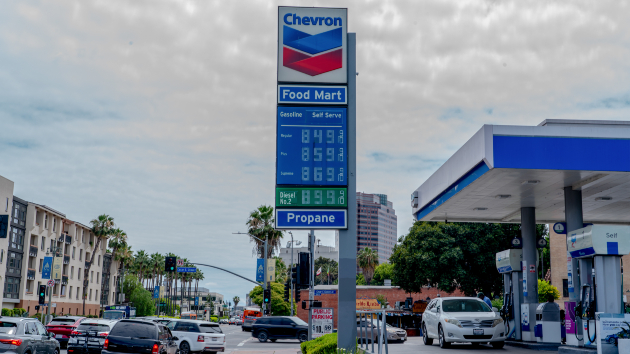
The U.S.-Iran accord, set to be formally signed on Friday, came as gasoline prices fell below $4 a gallon for the first time since March. Still, fuel costs stand well above pre-war levels, and an array of grocery prices remain elevated.
Futures markets overwhelmingly expect the Fed to hold interest rates steady when policymakers meet on Wednesday, according to the CME FedWatch Tool, a measure of investor sentiment.
In recent weeks, however, odds have risen for a potential interest rate hike by the end of 2026, the tool showed, granting a roughly four in 10 chance of a quarter-point increase in December.
The shift in expectations came after a stronger-than-expected jobs report earlier this month showed robust hiring in May. In theory, a resilient labor market could afford central bankers leeway to raise interest rates in an effort to dial back inflation, since elevated borrowing costs risk a hiring slowdown.
Inflation jumped for a third consecutive month as the Iran war continued to drive up prices in May, surpassing 4% for the first time in three years
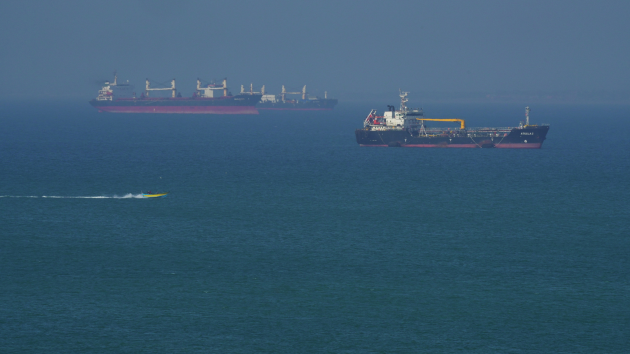
The Middle East conflict prompted the Iranian closure of the Strait of Hormuz, a maritime trading route that facilitates the transport of about one-fifth of global oil supply. The standoff triggered one of the largest oil shocks ever recorded, sending gasoline prices surging.
On Monday, President Donald Trump announced a U.S.-Iran deal that included plans to reopen the strait. Iranian Deputy Foreign Minister Kazem Gharibabadi confirmed the deal had been finalized and said it would be signed in Switzerland on Friday. Oil prices fell to their lowest level since March.
The benchmark rate stands at a level between 3.5% and 3.75%. That figure marks a significant drop from a recent peak attained in 2023, but borrowing costs remain well above a 0% rate established at the outset of the COVID-19 pandemic.
The rate decision will be the first major policy move overseen by Warsh, who will address reporters during a customary press conference minutes after the central bank issues its announcement.
During his term as a Fed governor in the late 2000s and early 2010s, Warsh gained a reputation as an interest-rate "hawk," meaning he generally preferred higher interest rates as a means of ensuring low and stable inflation.
Last year, Warsh voiced support for lower interest rates. At his Senate confirmation hearing in April, Warsh emphasized the threat posed by elevated inflation.
"When inflation surges -- as it has done in recent years -- grievous harm is done to our citizens, especially to the least well-off," Warsh said.
Bucking typical norms, former Fed Chair Jerome Powell Powell will cast a vote on interest rates as a member of the Fed's 12-person policymaking board.
Powell said he would stay on at the central bank's board of governors after his term as chair expired as an investigation into the Fed's office renovation continues.
The Department of Justice moved to drop a criminal probe into Powell in April, calling on the Fed's inspector general to carry out the investigation into cost overruns tied to the renovation. Powell will remain on the Fed's board for an indeterminate length of time, he said last month.
The criminal investigation into Powell focused on alleged false testimony to Congress about an office renovation. Powell, who was appointed by Trump in 2017, has rebuked the probe as a politically motivated effort to influence interest-rate policy. Trump denied any involvement in the criminal investigation.
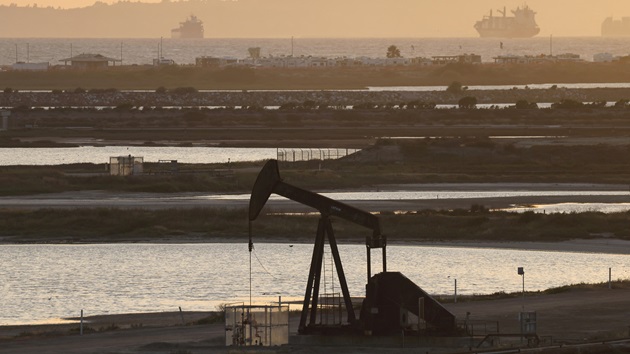
A pumpjack stands idle in the Huntington Beach oil field on April 23, 2026 in Huntington Beach, California. (Mario Tama/Getty Images)
(NEW YORK) -- Oil prices on Monday fell to their lowest level since March after U.S. officials announced an agreement between the United States and Iran.
West Texas Intermediate futures price, the benchmark index for U.S. trading, registered at about $80.40. That figure, which amounted to a 5% drop on Monday, marked the lowest price since March 5, just a week after the outbreak of the Iran war.
Stock prices, meanwhile, climbed on hopes of a resolution to the Iran war. The Dow Jones Industrial Average jumped 530 points, or 1%, while the S&P 500 increased 1.4%. The tech-heavy Nasdaq rose 2.3%.
Gas prices have fallen toward $4 per gallon in recent weeks, nearing the milestone as oil costs have eased in response to negotiations between the U.S. and Iran.
The national average price of a gallon of gas stands at $4.06, marking a decline of 46 cents, or 10.2%, over the past month, AAA data showed. Gas prices, however, remain $1.08 higher than where they stood before the Iran war.
The Middle East conflict prompted the Iranian closure of the Strait of Hormuz, a maritime trading route that facilitates the transport of about one-fifth of global oil supply. The standoff triggered one of the largest oil shocks ever recorded, sending gasoline prices higher.
President Donald Trump said in a Sunday social media post that the U.S. and Iran had reached a deal that will open up the strait.
"I hereby fully authorize the toll free opening of the Strait of Hormuz, and, simultaneously herewith, authorize the immediate removal of the United States Naval blockade," Trump wrote.
"Ships of the World, start your engines. Let the oil flow!" he added.
Iranian Deputy Foreign Minister Kazem Gharibabadi confirmed the deal had been finalized and said it would be signed in Switzerland on Friday.
Trump said the strait would open after the formal signing of the deal on Friday. The oil flow is linked to mine removal, Trump noted.
Crude oil is the main ingredient in auto fuel, accounting for more than half of the price paid at the pump, according to the federal U.S. Energy Information Administration.
The U.S. is a net exporter of petroleum, meaning the country produces more oil than it consumes. But since oil prices are set on a global market, U.S. prices move in response to swings in worldwide supply and demand.
ABC News' David Brennan and Isabella Murray contributed to this report.
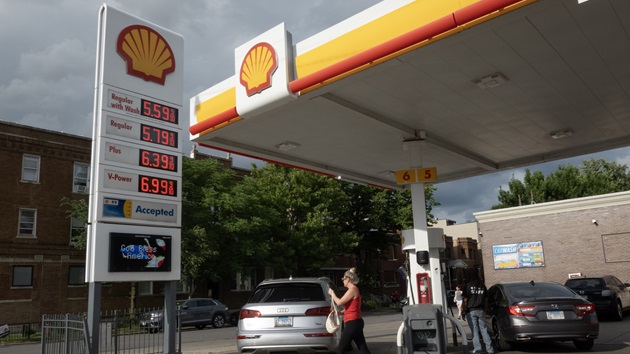
Fuel prices are displayed at a gas station on June 09, 2026 in Chicago, Illinois. (Scott Olson/Getty Images)
(NEW YORK) -- Consumer sentiment improved in June for the first time since the outbreak of the Iran war as gasoline prices eased in recent weeks, but shopper attitudes remained near their worst level on record, University of Michigan survey data on Friday showed. The reading exceeded economists' expectations.
The survey snapped three consecutive months of dampening consumer sentiment, recovering from an all-time low in May, data showed. The University of Michigan has conducted the survey for the past 80 years.
This improvement in sentiment was widespread, seen across age, education and political party, Surveys of Consumers Director Joanne Hsu said in a statement. Overall assessments and expectations of personal finances and business conditions all rose in June, she noted.
The fresh figure comes days after a government report on inflation showed the pace of price increases exceeded 4% for the first time in three years.
Prices rose 4.2% in May compared to a year earlier, increasing 0.5% from the prior month, according to U.S. Bureau of Labor Statistics data.
Consumers expect inflation to move higher over the next year, hitting a pace of 4.8% in June 2027, the University of Michigan survey showed.
The Middle East conflict prompted the Iranian closure of the Strait of Hormuz, a maritime trading route that facilitates the transport of about one-fifth of global oil supply. The standoff triggered one of the largest oil shocks ever recorded, sending gasoline prices higher.
Drivers stung by high gas prices have enjoyed some welcome relief over recent weeks, however, even as the impact of the Iran war continues to choke off oil supply.
The national average price of a gallon of gas stands at $4.10, marking a decline of 40 cents, or 8.8%, over the past month, AAA data showed. Gas prices, however, remain $1.12 higher than where they stood before the Iran war.
Consumer spending, which accounts for about two-thirds of U.S. economic activity, could weaken if shopper remains lackluster.
Spending slowed over the first three months of 2026 compared to the previous three-month period, according to government data issued earlier this year. The economy remained solid at the outset of this year, however, as gross domestic product rose 2% on an annualized basis, the report showed.
Elon Musk is photographed at Space X in Brownsville, Texas, May 27, 2025. (Marvin Joseph/The Washington Post via Getty Images)
(NEW YORK) -- Elon Musk, the wealthiest person alive, could become the first-ever trillionaire when SpaceX goes public on Friday.
The company's founder and CEO is set to own roughly four out of every 10 SpaceX shares after the initial public offering (IPO). If SpaceX were to achieve its target valuation of $1.75 trillion, Musk would accrue hundreds of millions of dollars in new wealth, at least on paper.
SpaceX builds and operates spacecraft, including thousands of satellites deployed in support of its Starlink satellite internet service. Earlier this year, the Texas-based firm merged with xAI, a Musk-led artificial intelligence company that offers the chatbot Grok.
The potential financial windfall would vault Musk even further ahead of other financial titans. Musk currently boasts a net worth of about $780 billion, according to Forbes. The second-wealthiest person in the world, Google founder Larry Page, counts a net worth of $291 billion.
If Musk were to become a trillionaire, his net worth would exceed the wealth of the poorest 46% of the global population, or about 3.8 billion people, according to a report issued by non-profit Oxfam on Thursday.
The benchmark would indicate Musk's wealth had grown about $550 billion over the past year, which breaks down to more than $1 million per day, Oxfam said.
After the IPO, Musk could own a major stake in two of the 10-largest companies in the world as measured by market capitalization: Tesla and SpaceX.
Musk's wealth stems primarily from the sizable stakes he holds in those two companies, Jason Schloetzer, a professor of accounting at Georgetown University who focuses on executive compensation, told ABC News.
His wealth, in other words, will depend in large part on the price of shares in those firms.
The SpaceX IPO has divided stock analysts, some of whom tout its earnings potential in the lucrative aerospace and AI industries, even as others bemoan what they view as pie-in-the-sky initiatives like space-bound data centers.
The company's revenue jumped to $18.7 billion in 2025, soaring 33% compared to the previous year, a financial filing showed. Nearly a quarter of that revenue came from Starlink, which counted millions of subscribers. Still, SpaceX failed to turn a profit, registering a loss of $4.9 billion last year.
The company is targeting a launch price of $135 per share, which would amount to a $1.75 trillion valuation and a massive boon for Musk. Under that scenario, Musk's net worth would sail well beyond $1 trillion. It would mark the largest IPO of all time.
Some analysts, however, have questioned that target valuation. Nicolas Owens, an analyst at Morningstar, issued a memo this week criticizing the hoped-for share price. Citing technological challenges faced by the company's AI initiatives, Owens pegged the value of the stock at about $63 a share, less than half of the target price.
After the IPO, SpaceX will be subject to new attention from public investors and regulators, which could test the company's long-term ambitions, Schloetzer said.
"It remains to be seen whether the valuation of SpaceX can maintain or whether we'll see it come down once it's under the scrutiny of public markets," Schloetzer added.
Observers seeking evidence of potential shareholder gains can look no further than Musk-led Tesla. Over the past five years, Tesla shares have soared 90%, outpacing a 71% rise in the S&P 500 over that time. But shares of Tesla have also been buoyed by moonshot ventures like self-driving taxis and humanoid robotics.
"Clearly, fundamentals matter in the long run," Schloetzer said. "But it seems like Musk has been able to defy fundamentals in the past and he may be able to do that again."
Regardless of its size, the potential influx of wealth from the SpaceX IPO comes with a catch. Musk cannot sell any of his SpaceX shares until a year after the IPO, according to a financial filing. After that, a move to sell shares would erode Musk's stake in the company and reduce his control over decision-making.
"Selling shares would dilute his ownership control and voting power, but he wants to retain that," Schloetzer said. "On paper, you may be wealthy, but that's an asset you're not willing to sell."
Meanwhile, Tesla shareholders last year granted Musk a compensation package that could earn him more than $1 trillion over the coming years, meaning he may eventually push toward a net worth of $2 trillion.
"The numbers are so large it's hard to wrap your brain around," Schloetzer said.
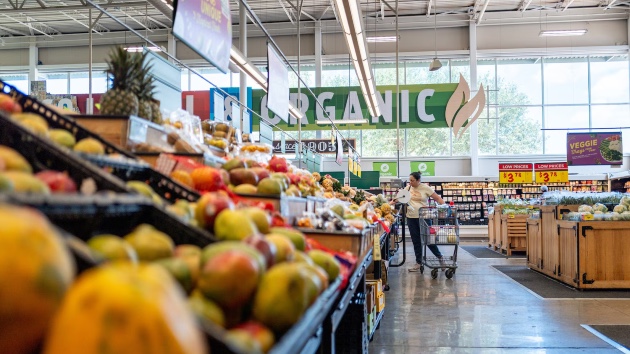
A customer shops for produce at an H-E-B grocery store on May 11, 2026 in Austin, Texas. (Brandon Bell/Getty Images)
(NEW YORK) -- Inflation jumped for a third consecutive month as the Iran war continued to drive up prices in May, surpassing 4% for the first time in three years. The reading matched economists' expectations.
Prices rose 4.2% in May compared to a year earlier, marking an increase from a year-over-year inflation rate of 3.8% in the prior month, U.S. Bureau of Labor Statistics data showed.
As recently as February, inflation clocked in just a few ticks above the Federal Reserve's target level of 2%.
The Middle East conflict prompted the Iranian closure of the Strait of Hormuz, a maritime trading route that facilitates the transport of about one-fifth of global oil supply. The standoff triggered one of the largest oil shocks ever recorded.
Energy prices -- a broad index that includes gasoline -- soared 23% in May compared to a year earlier, data showed.
As a result, gasoline prices surged. The price of an average gallon of gas stood at $4.15 as of Wednesday, AAA data showed -- an increase of $1.17 per gallon since the war began on Feb. 28. That amounts to a nearly 40% price jump in about three-and-a-half months.
The oil shortage also drove up diesel prices, putting upward pressure on grocery prices. Diesel is the lifeblood of the food supply chain, fueling trucks and ships. Higher fuel costs for suppliers mean price hikes in grocery aisles as the increased costs are passed down the supply chain.
Prices for tomatoes soared 32% in May compared to a year earlier, government data showed. Seafood prices jumped 6% over that period, while beef prices climbed nearly 13%.
A persistent increase in consumer prices may put pressure on the Fed to raise interest rates as a means of dialing back inflation.
What does the inflation report mean for consumers?
The latest price data spells more bad news for shoppers, helping to explain widely felt angst in the check-out aisle.
In May, shoppers registered their worst sentiment on record in a survey conducted each month by the University of Michigan since 1952.
Prices ticked higher last month for a range of essentials, including food, gasoline and medical care. Overall, inflation stands at its highest level since April 2023.
"Americans are getting crushed by high prices and they’re telling us every chance they get that they can’t keep up," Janelle Jones, a senior fellow at the left-leaning Groundwork Collaborative and a former chief economist at the Labor Department under President Joe Biden, told ABC News in a statement.
Inflation outpaced the rate of wage gains for the second consecutive months, eating away at the purchasing power of take-home pay for many Americans.
A continued decline in real wages -- a term used by economists to describe inflation-adjusted pay -- could erode the spending power of middle- and lower-income Americans over the second half of the year, Joseph Brusuelas, principal and chief economist at RSM, told ABC News.
Still, the inflation report offered a bright spot. Core inflation -- a measure of price increases that strips out volatile food and energy prices -- clocked at 2.9% over the year ending in May. While the figure marked its highest level since September, it came in well below the overall inflation rate.
Preston Caldwell, chief U.S. economist at Morningstar, described the core inflation rate as "close to normal."
Between April and May, meanwhile, prices declined for some products like apparel and new vehicles.
Still, the fate of shoppers may depend on the outcome of the Iran war, particularly the status of tanker traffic in the Strait of Hormuz. While oil prices have eased in recent weeks, they remain well above where they stood before the Middle East conflict.
"The trouble is, the longer it takes to find a resolution, the more likely oil prices remain elevated. And the longer energy prices stay elevated; the stickier inflation can get," Bret Kenwell, an investing analyst at eToro, told ABC News.
What does the inflation report mean for interest rates?
For now, futures markets overwhelmingly expect the Fed to hold interest rates steady when policy makers meet next week, according to the CME FedWatch Tool, a measure of investor sentiment.
The meeting will be the first since Kevin Warsh began a four-year term atop the central bank.
During his term as a Fed governor in the late 2000s and early 2010s, Warsh gained a reputation as an interest-rate "hawk," meaning he generally preferred higher interest rates as a means of ensuring low and stable inflation.
Last year, however, Warsh voiced support for lower interest rates, rebuking the Fed's concern about inflation risk posed by a flurry of new tariffs.
At his Senate confirmation hearing in April, Warsh emphasized the threat posed by elevated inflation.
"When inflation surges -- as it has done in recent years -- grievous harm is done to our citizens, especially to the least well-off," Warsh said.
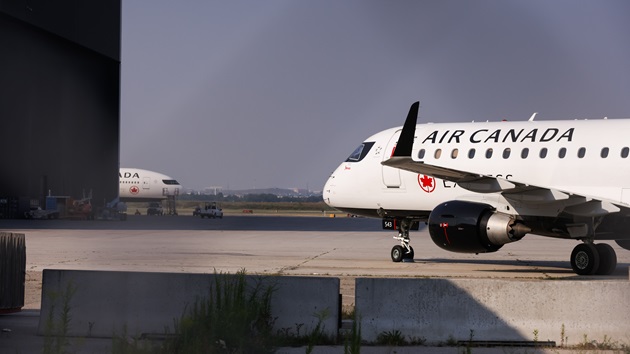
An Air Canada plane is seen at Pearson International Airport on August 14, 2025 in Toronto, Canada. (Cole Burston/Getty Images)
(TORONTO) -- An Air Canada pilot was arrested Monday after a probe discovered he had been allegedly flying hundreds of flights for at least 17 years without a proper license.
Canadian police officials outlined Geoffrey Wall's alleged fraud, which they said, "read like a movie script."
Since 2009, when Wall was promoted to captain, he has been flying with a fraudulent airline transport pilot license, the credential that would allow him to fly commercial airplanes as a captain, Peel Regional Police said.
Authorities compared Wall to a doctor who is licensed to practice family medicine marching into a hospital to perform brain surgery.
"Licensing requirements exist for a reason. They exist to keep people safe," Deputy Chief Nick Milinovich of the Peel Regional Police said.
Wall's arrest was part of a fraud investigation dubbed "Project Icarus," which started after a random certification check done last year at Pearson International Airport in Toronto turned up "anomalies," investigators said.
Wall, 59, of Barrie, Ontario, is no longer working with Air Canada, the airline said Monday night.
In a news release, Air Canada said it "takes this matter with utmost seriousness."
"Safety was not compromised by this incident because all pilots at Air Canada undergo mandatory recurrent training every six months to validate their flying competency, including a flight check with a certified Transport Canada check-pilot every 12 months," the airline said in a statement.
"However, appropriate licensing is an essential layer of the airline industry’s multi-layered approach to safety, so Air Canada takes this matter with utmost seriousness," it added.
Wall is charged with fraud, public mischief and other offenses. He was released on his own recognizance and is due back in court later this month.
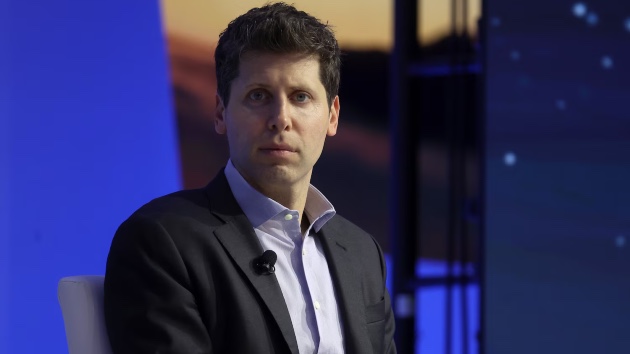
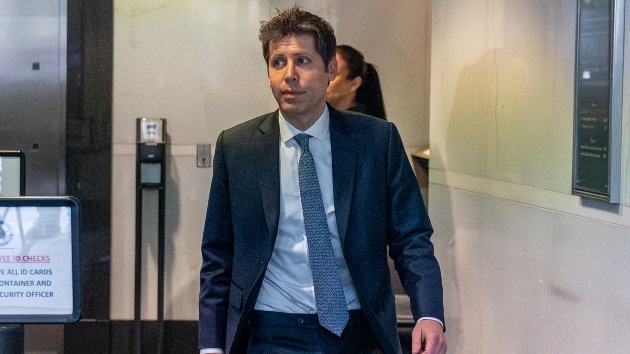
In this Nov. 16, 2023, file photo, OpenAI CEO Sam Altman looks on during the APEC CEO Summit at Moscone West in San Francisco. (Justin Sullivan/Getty Images, FILE)
(NEW YORK) -- OpenAI, the artificial-intelligence company behind ChatGPT, announced Monday night it had filed confidentially for an initial public offering (IPO), setting up the firm to raise fresh funds as it competes with deep-pocketed tech giants in the fast-growing AI industry.
In a post on X, OpenAI said it had not determined when the company would begin listing on public markets.
"We have not decided on timing yet; it may be a while because there are things we want to do that are likely easier as a private company. But it’s a complicated set of tradeoffs and this gives us the option to go public sooner if that ends up being best," the company said.
The move would subject the privately held company to new scrutiny from public investors and regulators, as well as ongoing financial reporting requirements. OpenAI valued itself at $852 billion after a round of funding in March.
e HR recruitment manager holding resume in hands while having an interview in a modern office. (Xavier Lorenzo/Getty Images)
(NEW YORK) -- Hiring blew past expectations in May, registering at a blockbuster clip despite a continued rise in inflation set off by the Iran War.
The U.S. added 172,000 jobs in May, according to the report, which marked an acceleration from 115,000 jobs added in April. The reading for April exceeded economists' expectations. The reading amounted to a slight downshift from March, when the U.S. economy gained 185,000 jobs.
Still, the job gains in May indicated a robust expansion of the labor market, defying concern about a potential economic downturn. Hiring has proven unexpectedly resilient in recent months, despite a rise in costs borne by businesses and shoppers.
The unemployment rate held steady at 4.3% in May, the Bureau of Labor Statistics (BLS) said. Unemployment remains low by historical standards.
The leisure and hospitality sector added 70,000 jobs in May, far exceeding an average of 14,000 jobs added each month over the past year. Job gains also came in local government and healthcare.
The Middle East conflict, which began on Feb. 28, prompted the Iranian closure of the Strait of Hormuz, a maritime trading route that facilitates the transport of about one-fifth of global oil supply. The standoff triggered one of the largest oil shocks ever recorded.
The U.S. is a net exporter of petroleum, meaning the country produces more oil than it consumes. But since oil prices are set on a global market, U.S. prices move in response to swings in worldwide supply and demand.
The price of an average gallon of gas stood at $4.24 as of Thursday, AAA data showed – an increase of $1.26 per gallon since the war began on Feb. 28. That amounts to a roughly 42% price jump in about three months.
Grocery prices have also climbed as a result of higher diesel costs borne by suppliers.
A persistent increase in consumer prices may put pressure on the Fed to raise interest rates as a means of dialing back inflation. The choice to raise interest rates could slow price increases, but it risks a cooldown in economic performance.
For now, the U.S. economy appears robust. The economy grew at a solid pace over the first three months of 2026, rebounding from sluggish performance at the end of last year.
Futures markets overwhelmingly expect the Fed to hold interest rates steady when policymakers meet next month, according to the CME FedWatch Tool, a measure of investor sentiment.
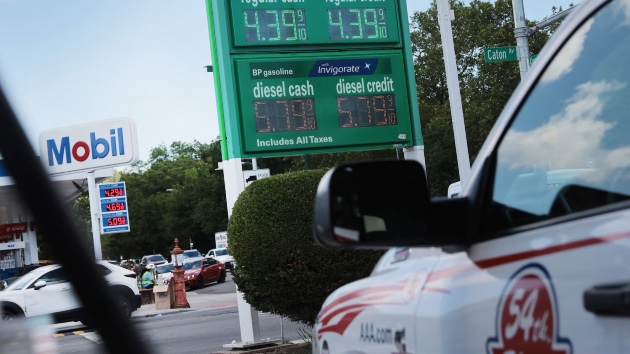
Fuel prices are displayed at a gas station in Brooklyn on June 01, 2026, in New York City. (Spencer Platt/Getty Images)
(NEW YORKI) --Drivers stung by high gas prices have enjoyed some welcome relief over the last couple of weeks, even as the impact of the Iran war continues to choke off oil supply.
The national average price of a gallon of gas stood at $4.26 on Wednesday, marking a decline of 30 cents, or 6.5%, since a recent peak on May 21.
Still, prices remain well above where they clocked in before a historic oil shock set off by the war. In late February, the average gallon of gas ran less than $3.
The dropoff in gas prices owes to a decline in oil costs over the latter part of last month, which coincided with a slump in demand following Memorial Day weekend, some analysts said.
Still, they cautioned, gas prices may rise again as oil prices jump and the war shows little sign of an imminent resolution. If the war continues, some analysts said, gas price could top $5 a gallon by next month.
"It's so volatile," Patrick Penfield, a professor of supply chain practice at Syracuse University, told ABC News. "If the war ended, prices would likely go down. But if it continues, you'll see prices go up."
In Georgia, the state with the lowest average gas prices, a gallon costs about $3.79, AAA data shows. In all, the AAA data says six states currently sell gas at or below an average price of $4 per gallon.
By contrast, the cost of a gallon of gas in California stands at $5.99, making it the state with the highest prices, AAA data shows. Even in California, however, the average price has fallen about 10 cents over the past week.
At the outset of the war, gasoline prices surged in response to Iran’s effective closure of the Strait of Hormuz, a maritime trading route that facilitates the transport of about one-fifth of global crude supply.
Oil prices began to fall in mid-May, however, as Iran and the U.S. appeared willing to strike an agreement that would reopen the strait. Crude oil is the main ingredient in auto fuel, accounting for more than half of the price paid at the pump, according to the federal U.S. Energy Information Administration.
On Friday, U.S. oil prices fell as low as about $86 a barrel, marking a drop of about 20% over a 10-day stretch.
"Gas prices have seen a big push because crude prices have dropped. Crude prices have dropped largely because the president has been indicating that we're close to an agreement with Iran," Ramanan Krishnamoorti, a professor of petroleum engineering at the University of Houston, told ABC News.
The U.S. is a net exporter of petroleum, meaning the country produces more oil than it consumes. But since oil prices are set on a global market, U.S. prices move in response to swings in worldwide supply and demand.
Oil prices have ticked up in recent days, but they remain below $100 a barrel. As long as oil prices remain under that benchmark, gas prices may continue to hold steady or even decline, Denton Cinquegrana, chief oil analyst at Dow Jones Energy, told ABC News.
A near-term drop in gas prices appears possible because gas sellers are holding onto unusually large profit margins, meaning they could reduce retail prices even if their input costs maintain current levels, Cinquegrana said. Over the past two years, the average margin for sellers came in at about 34 cents per gallon, he added, but it currently stands at 50 cents per gallon.
"There's still some room for gas prices to move down," Cinquegrana said.
Looking weeks or months into the future, however, analysts cautioned about a rise in oil and gasoline prices unless normal tariff resumes in the Strait of Hormuz.
"It's still possible later this summer, even ahead of July 4, we could see the national average pass $5 a gallon," Patrick De Haan, a petroleum analyst at GasBuddy, told ABC News Live on Monday.
"We could be seeing much higher gas prices in very short order if the strait doesn't reopen," he added.
U.S. President Donald Trump speaks during a Cabinet meeting in the Cabinet Room of the White House on May 27, 2026 in Washington, DC. (Win McNamee/Getty Images)
(NEW YORK) -- A court filing shows how businesses are getting money back from the U.S. government after the Supreme Court ruled many of President Donald Trump's tariffs were illegal.
The Trump administration has sent out $20.6 billion in tariff refunds so far, according to a new court filing.
The filing sheds light on how tens of thousands of American businesses are starting to get money back from the federal government after the Supreme Court ruled many of President Donald Trump's tariffs were illegal in February.
Walmart suggested last week it will cut prices for shoppers using the estimated $2.4 billion in refunds it's owed.
"On tariffs, we are availing ourselves of the process to get refunds. We would definitely bias and try to prioritize price investment for that ... we think the single best return that we can have on a $1 of capital right now is to invest in the customer and invest in price," Walmart CFO John David Rainey said on the company's earnings call.
Major companies like Walmart, Costco, Apple, Home Depot and General Motors have all confirmed in recent weeks they're applying for refunds.
It's unlikely that most companies will give money directly back to shoppers who already bought products with higher prices because of tariffs. The nonpartisan Tax Foundation estimates the tariffs that were ruled illegal cost the typical American household $700 last year.
UPS, FedEx and DHL said they will directly refund customers. UPS recently updated its website with details on how importers can claim to get money back.
In total, U.S. Customs and Border Protection has said it could owe up to $166 billion to more than 330,000 importers. The new filing notes $85 billion in refunds have been accepted so far, and the $20.6 billion represents money that has successfully gone back to importers who filed for refunds on the government's online portal.
A U.S. trade official previously overstated the amount of money that had gone out to companies by $10 billion, the filing noted.
In this Jan. 19, 2026, file photo, New York City Comptroller Mark Levine speaks at an event at the Brooklyn Academy of Music in New York. (Jason Mendez/Getty Images for Brooklyn Academy Of Music, FILE)
(NEW YORK) -- The top financial officer in New York City on Thursday warned that artificial intelligence could put thousands of workers in the nation’s largest metropolis out of a job as soon as this year, while acknowledging that the ultimate impact of AI remains uncertain.
The only sure thing, New York City Comptroller Mark Levin said in a new report: AI promises a “radical transformation” in the globe’s financial capital, influencing everything from wages to pension payments to Wall Street profits.
Levin, a Democratic former New York City Council member, predicted a range of scenarios both positive and negative, gauging the likelihood of outcomes as bullish as a broad-based productivity boom and as detrimental as mass layoffs.
City policymakers stand to play a central role in the technology’s ultimate fate, Levin added, calling for urgent steps like creating a multi-billion dollar financial cushion in case economic calamity strikes.
“There is no city in America – and perhaps none on earth – more exposed to both the promise and peril of artificial intelligence than New York City. And there are few places with more power to steer the transformation ahead,” Levin said in the report.
New York City hosts "hundreds of firms competing to make New York the capital of applied AI," Levine added, as well as roughly one million workers who labor in Manhattan office towers, many of whom stand at risk of AI disruption. The high stakes exemplify a reckoning likely to play out in cities nationwide, he said.
“Uncertainty is not an excuse for inaction,” Levin said, saying local policies should complement much-needed efforts at the federal level. “We are not helpless.”
The report comes as the stock market and the economy overall have both come to increasingly rely on massive spending on AI to propel continued growth, even as companies warn of job losses tied to the technology.
A wave of thousands of job cuts attributed to artificial intelligence over recent months has taken hold in industries as diverse as tech and airlines. In April, AI company Anthropic opted against releasing its latest model, Mythos, expressing concern that the tool could be used to bypass cybersecurity protections across the internet.
Blockbuster earnings from chip giant Nvidia on Wednesday, meanwhile, rebuked fears of a slowdown in the rip-roaring pace of growth for the artificial intelligence behemoth.
In his report, Levin assessed five potential scenarios for AI uptake in New York City, focusing on potential economic downsides and benefits of each. The forecast draws upon national AI scenarios developed by Moody’s Analytics, adapting them for New York City, Levin said.
In the most likely outcome, dubbed the “AI-Empowered Economy,” Levin predicted that AI would improve productivity while delivering moderate economic growth, including an average of about 52,000 jobs added each year through 2030. Levin pegged the likelihood of this outcome at 35%.
A more pessimistic scenario, which Levin called “AI Falls Flat," foresees a drop-off in AI investment and an accompanying stock market slide. If this outcome comes to pass, New York City would lose about 52,500 jobs as soon as this year, suffering temporary ill-effects akin to those that coincide with a recession, Levin said. The probability of this scenario, he added, stands at 25%.
Other possible outcomes include “faster-than-expected AI” adoption that improves productivity but replaces jobs, as well as an “AI shockwave” that upends white-collar employment.
The "most optimistic" of the five scenarios, Levin says, is a "Productivity Boon," in which AI-driven productivity growth complements job growth, rather than displacing it, boosting compensation in the process. Levin puts the likelihood of this outcome at 15%.
To be sure, Levin said, the potential economic impact of AI remains highly uncertain. Other economic trends unrelated to AI could also hold significant implications for the city's economy, Levin added, pointing to a historic oil shock that has driven up fuel and grocery prices.
Levin touted the role of local government in responding to the changes wrought by AI, whether they prove favorable or otherwise.
"These are not questions we can leave to Silicon Valley, Washington, or the market alone. New Yorkers must help shape the future ourselves," Levin said.
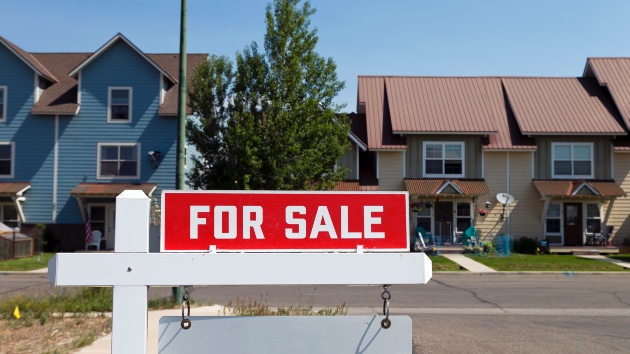
Houses with a 'For Sale' sign in a small new neighborhood in Gunnison, Colorado 6/18/20 (Nathan Bilow/Getty Images)
(NEW YORK) -- U.S. Treasury yields soared in recent days as the Iran war stoked inflation fears, threatening to drive up borrowing costs for everything from mortgages to credit cards to auto loans.
The yields on 30-year bonds – the amount paid to a bondholder annually – touched their highest point since 2007. Ten-year Treasury yields peaked at about 4.69% on Tuesday, marking a roughly three-quarter percentage point jump from the start of the war on Feb. 28.
The yield on 10-year Treasuries retreated on Wednesday, registering at 4.58%. Still, yields exceed the level reached during a bond selloff in the aftermath of President Donald Trump’s “Liberation Day” tariffs in April 2025.
Since bonds pay a given investor a fixed amount each year, the specter of inflation risks higher consumer prices that would eat away at those annual payouts. In this case, a global oil shock has pushed up energy prices which in turn has trickled into other costs, such as groceries.
As a result, bonds have become less attractive. When demand falls, bond yields rise.
“It’s really all about the Iran war and its inflationary impact,” Ted Rossman, a senior industry analyst at Bankrate, told ABC News.
High bond yields make borrowing more expensive for average Americans because Treasury rates influence the rates offered by lenders.
Long-term Treasury yields help set interest payments for mortgages, credit cards, car loans and just about any other type of borrowing, Patrice Carrington, a professor of real estate at New York University, told ABC News.
The reason for the rise in borrowing costs is that regulated lenders are required to hold reserve assets, often made up in part by U.S. Treasuries, Carrington added. When Treasury yields rise, it raises the costs incurred by banks holding Treasuries on their books. Lenders, in turn, offset those added expenses with higher borrowing costs.
“The bank will pass along that higher cost of capital to any consumer loan,” Carrington said.
The onset of this pain for consumers is exemplified by the housing market, where the average interest rate for a 30-year fixed mortgage stands at 6.72% as of Monday, Mortgage News Daily data showed. Mortgage rates have climbed three-quarters of a percentage point from pre-war levels.
“That’s a really big jump,” Rossman said.
Each percentage-point rise in a mortgage rate can impose thousands or tens of thousands of dollars in additional costs each year, depending on the price of the house, according to Rocket Mortgage.
Credit card rates, by contrast, have remained flat over the course of the Iran war, though at heightened levels, Rossman said.
The average credit card interest rate stands at 19.57%, just slightly below where it stood before the war began, Bankrate data showed. At the start of 2026, futures markets expected the Fed to likely cut interest rates at least once by the end of the year, which would put downward pressure on credit card rates.
As the Fed weathers a renewed bout of inflation, however, markets estimate about a 50% chance of interest rates remaining unchanged over the course of the year and a 37% chance of a rate hike, according to the CME FedWatch Tool, a measure of market sentiment. Markets peg the odds of a rate cut this year at less than 2%.
As a result, credit card rates "are staying higher for longer" than many observers anticipated, Rossman said.
Analysts differed in their recommendations for consumers weighing whether to move forward now with securing a loan or wait for a potential decline in interest rates.
Liu Lu, a professor at the Wharton School at the University of Pennsylvania, said mortgage rates are unlikely to decline substantially in the near-term, meaning borrowers who can afford a loan at current rates may as well take the plunge.
“I wouldn’t bet on trying to catch the opportune moment,” Lu told ABC News.
Carrington, on the other hand, counseled patience for loan seekers.
Eventually, the economy will falter and the Fed will cut interest rates, pushing down borrowing costs, according to Carrington.
“We’re long overdue for a downturn,” Carrington said. “I absolutely think borrowers should wait.”
In the meantime, the impact of elevated bond yields on consumers isn't entirely negative. The trend means better returns for investors who place their money into financial instruments such as money market funds or high-interest savings accounts, which are historically safer investments than the stock market.
OpenAI CEO Sam Altman arrives to court at the Ronald V. Dellums Federal Building on May 12, 2026 in Oakland, California. (Photo by Benjamin Fanjoy/Getty Images)
(NEW YORK) -- A jury on Monday found that Elon Musk waited too long to bring claims accusing OpenAI, under Sam Altman’s leadership, of abandoning its public-benefit mission as it moved toward a for-profit structure.
The nine-person advisory jury determined that the claims against OpenAI and Altman were barred due to the statute of limitations. Judge Yvonne Gonzalez Rogers accepted the determination and dismissed the claims.
The three-week trial at a federal courthouse in Oakland, California, featured testimony from Musk and Altman, as well as Microsoft CEO Satya Nadella.
When Musk sued OpenAI and Altman two years ago, he claimed that the company abandoned its mission of benefiting humanity.
Musk, a co-founder of OpenAI, said he reached an agreement with the company's leaders on the nonprofit course of the firm when it launched in 2015.
Musk accused the company of later breaching agreement when it made ChatGPT-4 available for use by Microsoft -- meaning the tech giant got access to the then-most powerful version of its popular chatbot under an exclusive licensing agreement. Microsoft and OpenAI have renegotiated the exclusive licensing agreement, allowing OpenAI to strike deals with other tech firms.
OpenAI rebuked the charges, calling them "baseless." Microsoft also denied any wrongdoing. Musk, the world's richest person, counts $803 billion in wealth, according to Forbes. He was seeking $150 billion in damages from the tech companies, as well as the removal of Altman from OpenAI's board of directors.
Musk also sought a legal order that requires OpenAI to abide by its alleged founding mission of aiding humanity and retaining its nonprofit form
OpenAI, which is not publicly traded, valued itself at $852 billion after a round of funding in March. Microsoft's value -- as measured by market capitalization -- stands at about $3.1 trillion.
Musk pleaded two claims against OpenAI: unjust enrichment and breach of charitable trust.
Lawyers for Altman argued that Musk was motivated by a pursuit of control over OpenAI, rather than an effort to safeguard its non-profit status. In fact, Musk sought to fold OpenAI into Tesla -- a move that would have absorbed the venture into a for-profit entity, lawyers for Altman said in a legal filing.
In 2018, Musk told a former OpenAI employee that financial support from Tesla would help OpenAI compete with tech giant Google, the filing said.
"Tesla [was] the only path that could even hope to hold a candle to Google," Musk said, according to the legal filing.
For his part, Musk said in the lawsuit that the agreement on OpenAI's non-profit status was memorialized in a legal filing when OpenAI was incorporated.
In the lawsuit, Musk alleged that Altman and OpenAI President Greg Brockman reaffirmed the founding agreement in written messages over the ensuing years.
"[I] remain enthusiastic about the non-profit structure!" Altman wrote to Musk in 2017, according to the lawsuit.
Musk, who helped bankroll OpenAI, launched a rival for-profit AI company in 2023 called xAI, which built a chatbot that competes with ChatGPT.
Acknowledging his previous criticism of the pace and ambitions of AI development, Musk said in a conference call on X in July 2023 that he entered the industry reluctantly.
U.S. Federal Reserve Chair Jerome Powell attends a press conference in Washington, D.C., the United States, April 29, 2026. (Photo by Li Rui/Xinhua via Getty Images)
(NEW YORK) -- A global pandemic that put millions of Americans out of work within days. The highest inflation in four decades. An unprecedented federal criminal investigation.
Fed Chair Jerome Powell faced a succession of crises over his 8-year tenure atop the central bank, which ends on Friday. Powell’s decisions along the way held stakes as concrete as the budgets of everyday Americans and as heady as the political independence of a pillar institution.
President Donald Trump’s Fed Chair nominee Kevin Warsh is set to take the helm, inheriting a resilient economy by some measures, though one suffering from a renewed bout of inflation.
Powell said last month that he would take the unusual step of staying on at the central bank's 12-person board of governors after his term expires. The move grants Powell a role in interest-rate policy that could last until 2028, though he says he will step down once a Fed inspector general's investigation into a renovation of the central bank headquarters is closed.
The transition offers an opportunity to look back at Powell’s tenure, which spanned two presidents, three Treasury secretaries and 66 interest-rate decisions.
"You don't choose your challenges, but you do choose how you respond," Claudia Sahm, chief economist at New Century Advisors and a former Fed official, told ABC News. "In the end, Powell's legacy will be judged by those outcomes."
When Trump nominated Powell to become Fed chair, Trump described him as a "consensus builder" who "understands what it takes for our economy to grow."
Powell, a former investment banker and Treasury official under President George H.W. Bush, assumed the role in 2018. At the time, the economy was humming, the unemployment rate clocked in at a historically low level and inflation stood just a tick above the Fed’s target rate of 2%.
Powell hiked interest rates four times in his first year, putting strain on the stock market but leaving the Fed in position to stimulate the economy with rate cuts in the event of a slowdown. Policymakers wouldn’t have to wait long.
In the early months of 2020, the COVID-19 pandemic put tens of millions of Americans into lockdown, halting business across industries like restaurants and hospitality, while putting a large swathe of the labor force out of work.
At an emergency meeting in March 2020, Powell slashed interest rates to near-zero levels in an effort to stimulate a battered economy.
“Families, businesses, schools, organizations, and governments at all levels are taking steps to protect people’s health. These measures, which are essential for containing the outbreak, will nonetheless understandably take a toll on economic activity in the near term,” Powell told reporters at the time.
The unemployment rate soared from 4.4% in March to 14.7% in April, U.S. Bureau of Labor Statistics data showed.
To supercharge the recovery, Trump and President Joe Biden enacted economic stimulus meant to support people who'd lost their jobs or faced other hardship. Alongside low interest rates, that spending helped bring about a speedy economic recovery from the downturn.
The COVID-19 recession lasted only two months, making it the shortest in U.S. history, according to the National Bureau of Economic Research.
The speedy recovery vindicated the Fed's decision to slash interest rates, though it hadn’t been a particularly difficult choice, Alan Blinder, a professor of economics at Princeton University and former vice chairman of the Federal Reserve, told ABC News.
“The dropping of rates to the floor was both necessary and appropriate, and in a real sense, obvious,” Blinder said.
A bout of acute inflation soon took hold, however, emerging as a result of a supply shortage imposed by the COVID-19 pandemic and exacerbated by the Russia-Ukraine war. Powell initially downplayed the price increases, describing them as “transitory.” It proved a consequential mistake -- and Powell would later admit his error.
Annual inflation peaked at a 40-year high of 9.1% in June 2022. By then, Powell had begun to ratchet up interest rates and it would continue over the following year. The aggressive series of rate hikes put the central bank’s benchmark rate at its highest level since 2001. The move sent mortgage and credit card rates soaring.
By June 2023, annual inflation had plummeted to 3%, but Americans remained widely dissatisfied with price increases long afterward. Many economists forecast a recession and the type of job losses it typically entails. Fortunately, the downturn never came to pass.
"Inflation stayed high for too long but once it came down, it came down really fast. It came down without creating unnecessary pain in the labor market," Wendy Edelberg, director of the Hamilton Project and senior fellow in economic studies at the Brookings Institution, told ABC News.
In September 2024, less than two months before the presidential election, the Fed cut interest rates by 0.5%. The decision drew criticism from allies of Trump, who considered the move a potential boost for the economy that would benefit incumbent Democrats. Trump went on to win the election.
Within weeks of his return to the White House, in early 2025, Trump voiced public criticism of Powell, urging him to cut interest rates. The attacks intensified criticism of Powell that had begun in Trump’s first term.
Over the ensuing months, Trump began to slam Powell for cost overruns in a renovation project at the Fed’s headquarters in Washington, D.C. Last July, Trump made the first official trip to the Fed by a sitting president in almost 20 years, donning a hard hat as he toured the renovation with Powell.
The Fed attributed spending overruns to unforeseen cost increases, saying that its building renovation would ultimately "reduce costs over time by allowing the Board to consolidate most of its operations," according to the central bank's website.
By January, the Department of Justice had opened a criminal investigation into Powell, ratcheting up an extraordinary clash between the White House and the Fed. It was the first criminal probe of a Fed chair in the 113-year history of the central bank.
The probe centered on Powell’s testimony to Congress last year about the cost overruns. Powell issued a rare video message rebuking the investigation as a politically motivated effort to influence the Fed's interest rate policy.
"No one -- certainly not the chair of the Federal Reserve -- is above the law," Powell said. "But this unprecedented action should be seen in the broader context of the administration's threats and ongoing pressure."
Trump previously denied any involvement in the criminal investigation. The DOJ moved to drop its criminal probe into Powell last month. Washington U.S. Attorney Jeaninne Pirro said the investigation into the office renovation would be taken up by the Fed’s inspector general.
“The attack on the Fed chair was appalling,” Rebel Cole, a professor of finance at Florida Atlantic University who formerly worked at the Federal Reserve, told ABC News. “Powell stood up to it.”
Warsh, a former Fed official, will serve a 4-year term as chair. He is set to lead the Fed in a challenging period for central bank policymakers.
Inflation rose for a second consecutive month as the U.S.-Israeli war with Iran continued to send gasoline prices surging in April, government data on Tuesday showed. Annual inflation jumped to its highest level in three years, according to the U.S. Bureau of Labor Statistics.
Despite the disruption, some measures of economic health have proven resilient.
The unemployment rate held steady at a historically low level of 4.3% in April, leaving it little changed from when Powell began his tenure in 2018.
"The economy is pretty good but far from perfect," Blinder said, faulting Powell in part for elevated inflation, while attributing much of the blame to the Iran war. At the same time, Blinder praised Powell for his commitment to the independence of the Fed.
"That's the legacy that Warsh is inheriting," Blinder said.
An aerial view of the New York Stock Exchange's trading floor. Since the installation of the Hybrid Market system in 2007, there has been less traders on the floor due to an increase of electronically done trades and transactions. (xPACIFICA/Gety)
(NEW YORK) -- The Dow Jones Industrial Average on Thursday closed above 50,000, shrugging off a renewed bout of inflation and an apparent impasse in negotiations over the Iran war.
The rise in shares came as President Donald Trump visited Chinese President Xi Jinping in a high-stakes summit between the leaders of the world's two largest economies.
The Dow closed up 370 points, or 0.7%, registering at 50,063.46. The Dow first topped 50,000 in February. It stands about 55 points shy of an all-time record close.
The S&P 500 jumped 0.7%, while the tech-heavy Nasdaq increased 0.8%.
A group of corporate executives joined Trump on the trip, including Tesla CEO Elon Musk, Nvidia CEO Jensen Huang and Apple CEO Tim Cook.
After a dramatic welcoming ceremony, Trump sat down with Xi on the first day of a multi-day summit, during which Trump said he'd seek to deepen diplomatic and economic ties.
The trip came at a crucial time for Trump as the war with Iran drove up prices for Americans at home due in large part due to Iran's effective closure of the Strait of Hormuz. China is Iran's principal oil consumer.
Inflation rose for a second consecutive month as the war continued to send gasoline prices surging in April, government data this week showed.
Annual inflation jumped to its highest level in three years, according to the U.S. Bureau of Labor Statistics.
Sunny investor attitudes stem from robust corporate earnings, as well as milder economic fallout from the war than some forecasters feared, some analysts previously told ABC News.
Trump, they added, has displayed a willingness to back off of actions if they threaten a severe market reaction, reassuring investors wary of a prolonged conflict.
Despite the disruption, some measures of economic health have proven resilient.
Hiring slowed in April but remained solid, exceeding economists’ expectations, government data last week showed. The unemployment rate held steady at 4.3% in April, a low level by historic standards.
Additionally, the economy grew at an annualized rate of 2% in the first quarter of 2026, marking an acceleration from 0.5% growth recorded in the previous quarter.
ABC News' Kevin Shalvey and Jon Haworth contributed to this report.
(WASHINGTON) -- The Senate voted Wednesday to confirm Federal Reserve chair nominee Kevin Warsh, clearing the way for Warsh to replace central bank head Jerome Powell when his term ends later this week.
The Senate confirmed Warsh by a vote of 54 to 45. Sen. John Fetterman, D-Pa., was the lone Democrat to vote in favor of Warsh.
The vote comes weeks after the Department of Justice moved to drop its criminal probe into Powell. Before that, Warsh had faced a bipartisan stonewall in the Senate Banking Committee over the investigation.
The probe into Powell focused on alleged false testimony to Congress about an office renovation. Powell, whose term ends on Friday, called the investigation a politically motivated effort to influence interest-rate policy.
Last month, Washington U.S. Attorney Jeaninne Pirro said the investigation into the office renovation would be taken up by the Fed’s inspector general.
Sen. Thom Tillis, R-N.C., who previously vowed to oppose Warsh's nomination on account of the investigation, said he would flip his vote after the investigation was set aside. Tillis greenlit the nomination in a committee vote last month, helping advance Warsh to a confirmation vote on the full Senate floor.
Powell said last month that he would stay on at the central bank's board of governors after his term expires next month as the investigation into the central bank's office renovation continues.
"I've said I won't leave the board until this investigation is well and truly over with transparency and finality, and I stand by it," Powell said at a press conference in Washington, D.C.
"My concern is really about the series of legal attacks on the Fed, which threaten our ability to conduct monetary policy without considering political factors," Powell added.
Trump previously denied any involvement in the criminal investigation.
Powell could remain on the Fed's 12-member policymaking board until 2028, retaining a role in the central bank's interest-rate policy over that period.
Warsh, a former Fed official, will serve a 4-year term as chair. He is currently a fellow at the Hoover Institution conservative think tank, which is based at Stanford University.
During his term as a Fed governor in the late 2000s and early 2010s, Warsh gained a reputation as an interest-rate “hawk,” meaning he generally preferred higher interest rates as a means of ensuring low and stable inflation.
In recent months, however, Warsh has voiced support for lower interest rates, rebuking the Fed’s concern about inflation risk posed by a flurry of new tariffs issued last year.
Warsh is set to take the helm of the Fed in a challenging period for central bank policymakers.
Inflation rose for a second consecutive month as the U.S.-Israeli war with Iran continued to send gasoline prices surging in April, government data on Tuesday showed. Annual inflation jumped to its highest level in three years, according to the U.S. Bureau of Labor Statistics.
The Fed has opted to hold interest rates steady at three consecutive meetings since the outset of 2026. Before that, the Fed cut interest rates a quarter-point three straight times.
If the Fed moved to raise interest rates, it would hike borrowing costs for many consumer and business loans, risking an economic slowdown.
Markets forecast a roughly 60% chance of interest rates holding steady for the remainder of this year, according to the CME FedWatch Tool. The odds of an interest-rate hike by the end of the year stand at about 30%.
Close-up on a woman shopping at a convenience store and checking her receipt while exiting. (Hispanolistic.Getty)
(NEW YORK) -- Inflation rose for a second consecutive month as the U.S.-Israeli war with Iran continued to send gasoline prices surging in April, government data on Tuesday showed. The inflation report matched economists' expectations.
Prices rose 3.8% in April compared to a year earlier, marking an increase from a year-over-year inflation rate of 3.3% in the prior month. Annual inflation jumped to its highest level in three years, U.S. Bureau of Labor Statistics (BLS) data showed.
"I don't think about Americans' financial situation," President Donald Trump told reporters Tuesday as he was departing for a high-stakes trip to China, when asked to what extent Americans' financial situations were motivating him to make a deal with Iran.
"The most important thing, by far, is Iran cannot have a nuclear weapon," the president further said, adding, "Every American understands."
As recently as February, inflation stood at 2.4%, clocking in just a tick above the Federal Reserve’s target level of 2%.
The jump in prices last month owed in large part to a sharp rise in costs for products impacted by a global oil shock. Gasoline prices were 5% higher in April than March, the BLS report said. Airline fares climbed 2.8% from the previous month.
The Middle East conflict prompted the Iranian closure of the Strait of Hormuz, a maritime trading route that facilitates the transport of about one-fifth of global oil supply. The standoff prompted one of the largest oil shocks ever recorded.
The U.S. is a net exporter of petroleum, meaning the country produces more oil than it consumes. But since oil prices are set on a global market, U.S. prices move in response to swings in worldwide supply and demand.
Crude oil is the main ingredient in auto fuel, accounting for more than half of the price paid at the pump, according to the federal U.S. Energy Information Administration.
The price of an average gallon of gas stood at $4.50 as of Monday, AAA data showed – an increase of $1.52 per gallon since the war began on Feb. 28. That amounts to a roughly 50% price jump in about two-and-a-half months.
The surge in fuel prices sent costs surging for gas-dependent transportation, such as airline tickets. In March, airfare costs jumped more than 3% from a month earlier.
Within weeks, the jump in prices could spread to groceries, furniture and just about any other item delivered by diesel-fueled trucks and tankers, some analysts previously told ABC News.
The recent rise in prices has left many consumers feeling glum. In May, consumer sentiment fell to the lowest level ever recorded, according to a monthly survey conducted by the University of Michigan since 1978.
Consumer spending, which accounts for about two-thirds of U.S. economic activity, could weaken if shoppers remain pessimistic. In theory, a slowdown of spending could slow the economy.
By some measures, however, the U.S. economy has proven resilient amid the war.
Hiring slowed in April but remained solid, exceeding economists’ expectations, federal government data last week showed. The unemployment rate held steady at 4.3% in April, a low level by historic standards. Additionally, the economy grew at an annualized rate of 2% in the first quarter of 2026, marking an acceleration from 0.5% growth recorded in the previous quarter.
However, a persistent increase in consumer prices may put pressure on the Fed to raise interest rates as a means of dialing back inflation.
The Fed has opted to hold interest rates steady at three consecutive meetings since the outset of 2026. Before that, the Fed cut interest rates a quarter-point three straight times.
If the Fed moved to raise interest rates, it would hike borrowing costs for many consumer and business loans, risking an economic slowdown.
Markets forecast a roughly 70% chance of interest rates holding steady for the remainder of this year, according to the CME FedWatch Tool.
ABC News' Karen Travers, Emily Chang and Fritz Farrow contributed to this report.
A sign displays the prices of unleaded gasoline and diesel fuel at a Chevron gas station in Los Angeles on Monday, May 4, 2026. (Kyle Grillot/Bloomberg via Getty Images)
(LOS ANGELES) -- A Chevron gas station in Los Angeles elicited headlines in recent weeks for charging an eye-popping $8.71 a gallon, becoming an emblem for the spike in fuel costs set off by the Iran war.
Sky-high gas prices nationwide owe primarily to a historic oil shock that followed Iran’s effective closure of the Strait of Hormuz. But a lesser-known contributor helps account for just how high prices have gotten, at least at some name-brand stations selling fuel from the likes of Chevron, Shell and ExxonMobil.
Branded stations, which make up almost half of gas stations nationwide, charge about 6 cents more per gallon on average than their unbranded counterparts, according to data from the Oil Price Information Service (OPIS), a Dow Jones company, for the week ending on May 2. That price gap marks little change from where it stood before the war, OPIS data showed.
In at least one state, the price disparity runs significantly higher. Gas at a Chevron station in California costs an average of 48 cents more per gallon than the price at an unbranded station, the California Energy Commission (CEC) found in 2024. After Chevron, the most expensive average gas prices in California were found at Shell, 76 and Arco-branded stations, the CEC said.
Some analysts said the higher price of branded gas is due to additional costs, such as proprietary additives in the fuel, as well as a producer’s marketing budget and the payment forked over by stations for guaranteed access to its gas – costs that are passed on to consumers.
Other analysts and a California state watchdog, however, have said that the price disparity may stem from the market dominance of a handful of companies, allowing them to drive up the retail price.
The scrutiny comes as some large oil companies like British Petroleum, Valero and Marathon Petroleum report soaring profits amid the Iran war, though Chevron and Exxon saw profits decline due in part to one-time paper losses stemming from financial hedges meant to protect them against a possible price drop.
The price of an average gallon of gas currently stands at $4.52, an increase of $1.54 per gallon since the war began on Feb. 28, AAA data showed. That amounts to a nearly 52% jump in about two-and-a-half months.
Patrick Penfield, a professor of supply chain practice at Syracuse University, said the recent surge in prices could prompt a reexamination of the costs baked into the price at the pump, including the added charge for branded gas.
“When you see such big price increases for gasoline, everything should be looked at,” Penfield said.
Chevron did not directly respond to an ABC News request for comment. However, Jim Stanley, director of media relations at the Western States Petroleum Association, a industry trade group, contacted ABC News at Chevron's request.
Drivers choose branded gas stations as a matter of customer preference centered on issues like lighting, bathroom cleanliness or location, Stanley said.
"Any branded product – whether it’s medication or groceries or clothing – is going to generally cost more than a generic alternative," he added.
Stanley further said roughly 95% of branded gas stations operate as franchises, meaning they enter into agreements with big-name companies but retain self-ownership.
"Branded gas stations can have these brand standards that they hold their franchisees to: a higher standard than an independently owned store," Stanley added.
Kelly Davila, a spokesperson for Exxon, said the company doesn't "own or operate our retail stations."
Shell declined to respond to ABC News' request for comment.
Phillips 66, the parent company of 76, did not respond to ABC News' request for comment. Neither did Marathon Petroleum, the parent company of Arco.
Branded gas stations account for about 45% of stations nationwide, selling gas under the name of a major fuel company, OPIS data shows. Each of the brands touts a unique blend of additives that it says improves the gasoline and eases its effect on car engines. The extra ingredients go beyond the minimum standards mandated by federal and some state regulators, Denton Cinquegrana, chief oil analyst at Dow Jones Energy, told ABC News.
“At the end of the day, all gasoline has to meet a federal standard,” Cinquegrana said. “The branded gasoline goes above and beyond that minimum requirement.”
Higher prices charged by name-brand stations – a dynamic that stretches back decades – can be traced in part to spending on the development and production of the additives, Cinquegrana added: "They’re trying to recoup some of that investment.”
Some analysts, however, said it remains unclear whether the added ingredients deliver a meaningfully improved product.
“Regardless of each company’s claim, there is not sound evidence supporting the fact that additives do indeed improve the quality of gasoline, at least to the extent that the consumers perceive it to,” a study issued by the non-profit RAND corporation found in 2010.
The California Division of Petroleum Market Oversight (DPMO), a state watchdog agency, last year said it was "unable to independently verify claims that branded gasoline is superior to unbranded gasoline."
When asked about studies disputing the value of additives, Stanley, of the Western States Petroleum Association, declined to comment.
The higher price of branded gas also owes to marketing budgets borne by the big-name companies as well as elevated costs paid by retailers as part of agreements with the brands that guarantee them priority access in the event of a supply shortage, the U.S. Government Accountability Office said in a study of the issue published in 2005.
“Gas stations pay more for a contract for branded gasoline because they have a guarantee of supply. And they have a major global brand backing them up,” Cinquegrana said.
Some analysts and a California watchdog disputed those explanations. Rather, they said, the higher prices may reflect market power enjoyed by the large firms, giving them leeway to raise prices without fear of competition.
“My own reading of the data is that the branded companies are able to take advantage of a lack of a competitive market and are acting almost like an oligopoly,” Paasha Mahdavi, a professor of energy governance and political economy at the University of California, Santa Barbara, told ABC News, using a term that describes an industry dominated by a small number of companies.
Mahdavi focused on the relatively large price gap in California between branded and unbranded gas, which has widened in recent years.
In 2019, branded gas from companies like ExxonMobil, Arco, Valero and Chevron cost an average of 20 cents more per gallon in California; within five years, that price disparity had climbed to 31 cents, according to a DPMO study issued last year. Over that same period, the profitability of oil refiners in California has increased, DPMO said.
The rise in refinery profitability may be traced to the “exercise of market power by gasoline suppliers,” DPMO added, saying 90% of in-state refining capacity is controlled by four companies. As a result, elevated wholesale prices could be passed along the supply chain, DPMO said.
The largest companies appear to have “pretty strong control of not only upstream assets like oil and gas, but also control of the gas stations that are preferred by consumers based on location,” Mahdavi said. “They’re able to charge a higher premium.”
Valero did not respond to ABC News' request for comment.
Stanley, of the Western States Petroleum Association, said he is unsure why California features a larger gap in price between branded and unbranded gas than other states. One contributor, he said, could be the relatively low density of gas stations in the state.
"Competition brings down costs. When a retailer doesn't see that same level of competition, you can see that reflected in higher prices."
Stanley faulted environmental regulations in California for high overall gas prices.
"Branded or unbranded, gas in California is the most expensive in the country. That's because of supply constraints that have been created by state policies."
Mahdavi further said that the locations of branded gas stations may carry additional costs due to higher rents, accounting for some of the price gap.
The rise in prices during the Iran war offers an opportunity to revisit the factors that contribute to the price at the pump, according to Mahdavi.
“We can shine more light on what is driving these higher prices," he said.
In this photo illustration, the PayPal logo is displayed on the screen of a smart tablet. (Sheldon Cooper/SOPA Images/LightRocket via Getty Images)
(WASHINGTON) -- PayPal has agreed to waive $30 million in processing fees in order to resolve a federal investigation into an investment program that sought to boost Black and minority-owned businesses, the Justice Department announced Tuesday.
The probe is just one of a number launched under the Trump Justice Department scrutinizing companies that launched diversity, equity and inclusion (DEI) initiatives that Republicans have cast as unlawful and discriminatory.
DOJ had been probing whether PayPal's program, which was launched in 2020 following the killing of George Floyd amid social unrest around the country, violated a federal law prohibiting creditors from discriminating against applicants based on race.
In order to avoid further investigation, the company has agreed to waive processing fees for roughly $1 billion in transactions — estimated at $30 million -- "for eligible American small businesses that are veteran-owned or engaged in farming, manufacturing, or technology."
The announcement by DOJ does not explain why PayPal's transaction fee waivers will be directed to those specific classes of small businesses.
It has also agreed to launch a new small business initiative that does not account for "the race or national origin of the business owners."
“This Department of Justice is delivering on President Trump’s vow to root out illegal DEI from every corner of corporate America,” Acting Attorney General Todd Blanche said in a statement announcing the settlement. “American corporations are on notice: you will face our aggressive enforcement if you use race or national origin to discriminate against qualified Americans.”
The settlement does not include any admission of wrongdoing by PayPal, and under the agreement, the DOJ acknowledges it "has not made any determinations or findings regarding PayPal violating [the Equal Credit Opportunity Act] or any other federal law related to the economic opportunity fund."
“For more than two decades, PayPal has helped small businesses start, scale, and thrive by expanding access to digital financial tools," a PayPal spokesperson said in a statement to ABC News. "We’re excited to launch the Small Business Initiative to infuse American small businesses with even more economic opportunity.”
The Ateela 2 Oil Tanker boat navigates the sea on April 28, 2026 on Qeshm Island, Iran in the Strait of Hormuz. (Photo by Asghar Besharati/Getty Images)
(NEW YORK) -- An inflation report on Tuesday will provide a fresh gauge of prices as the Iran war ratchets up costs for gasoline, airfares and other expenses.
Economists expect consumer prices to have risen 3.8% in April, when a surge in gasoline costs took hold weeks into the war, which would mark a significant acceleration from 3.3% in the previous month.
As recently as February, inflation stood at 2.4%, clocking in just a tick above the Federal Reserve’s target level of 2%.
The Middle East conflict prompted the Iranian closure of the Strait of Hormuz in March, a maritime trading route that facilitates the transport of about one-fifth of global oil supply. The standoff prompted one of the largest oil shocks ever recorded.
The U.S. is a net exporter of petroleum, meaning the country produces more oil than it consumes. But since oil prices are set on a global market, U.S. prices move in response to swings in worldwide supply and demand.
Crude oil is the main ingredient in auto fuel, accounting for more than half of the price paid at the pump, according to the federal U.S. Energy Information Administration.
The price of an average gallon of gas stood at $4.52 as of Monday, AAA data showed – an increase of $1.54 per gallon since the war began on Feb. 28. That amounts to a nearly 52% price jump in about two-and-a-half months.
The surge in fuel prices sent costs surging for gas-dependent transportation, such as airline tickets. In March, airfare costs jumped more than 3% from a month earlier.
Within weeks, the jump in prices could spread to groceries, furniture and just about any other item delivered by diesel-fueled trucks and tankers, some analysts previously told ABC News.
The recent rise in prices has left many consumers feeling glum. In May, consumer sentiment fell to the lowest level ever recorded, according to a monthly survey conducted by the University of Michigan since 1978.
Consumer spending, which accounts for about two-thirds of U.S. economic activity, could weaken if shoppers remain pessimistic. In theory, a slowdown of spending could slow the economy.
By some measures, however, the U.S. economy has proven resilient amid the war.
Hiring slowed in April but remained solid, exceeding economists’ expectations, federal government data last week showed. The unemployment rate held steady at 4.3% in April, a low level by historic standards. Additionally, the economy grew at an annualized rate of 2% in the first quarter of 2026, marking an acceleration from 0.5% growth recorded in the previous quarter.
However, a persistent increase in consumer prices may put pressure on the Fed to raise interest rates as a means of dialing back inflation.
The Fed has opted to hold interest rates steady at three consecutive meetings since the outset of 2026. Before that, the Fed cut interest rates a quarter-point three straight times.
If the Fed moved to raise interest rates, it would hike borrowing costs for many consumer and business loans, risking an economic slowdown.
Markets forecast a roughly 70% chance of interest rates holding steady for the remainder of this year, according to the CME FedWatch Tool.